LPS 1175 is an important security standard for physical security products used to protect buildings, sites, people and critical assets. But what is LPS 1175, how does the rating system work, and why is it important when choosing high-security perimeter protection?
At Security Solutions, we manufacture and supply engineered physical security solutions for sites across the UK. From HVM road blockers and vehicle barriers to security turnstiles and controlled access systems, our solutions are designed to help organisations protect their people, property and infrastructure.
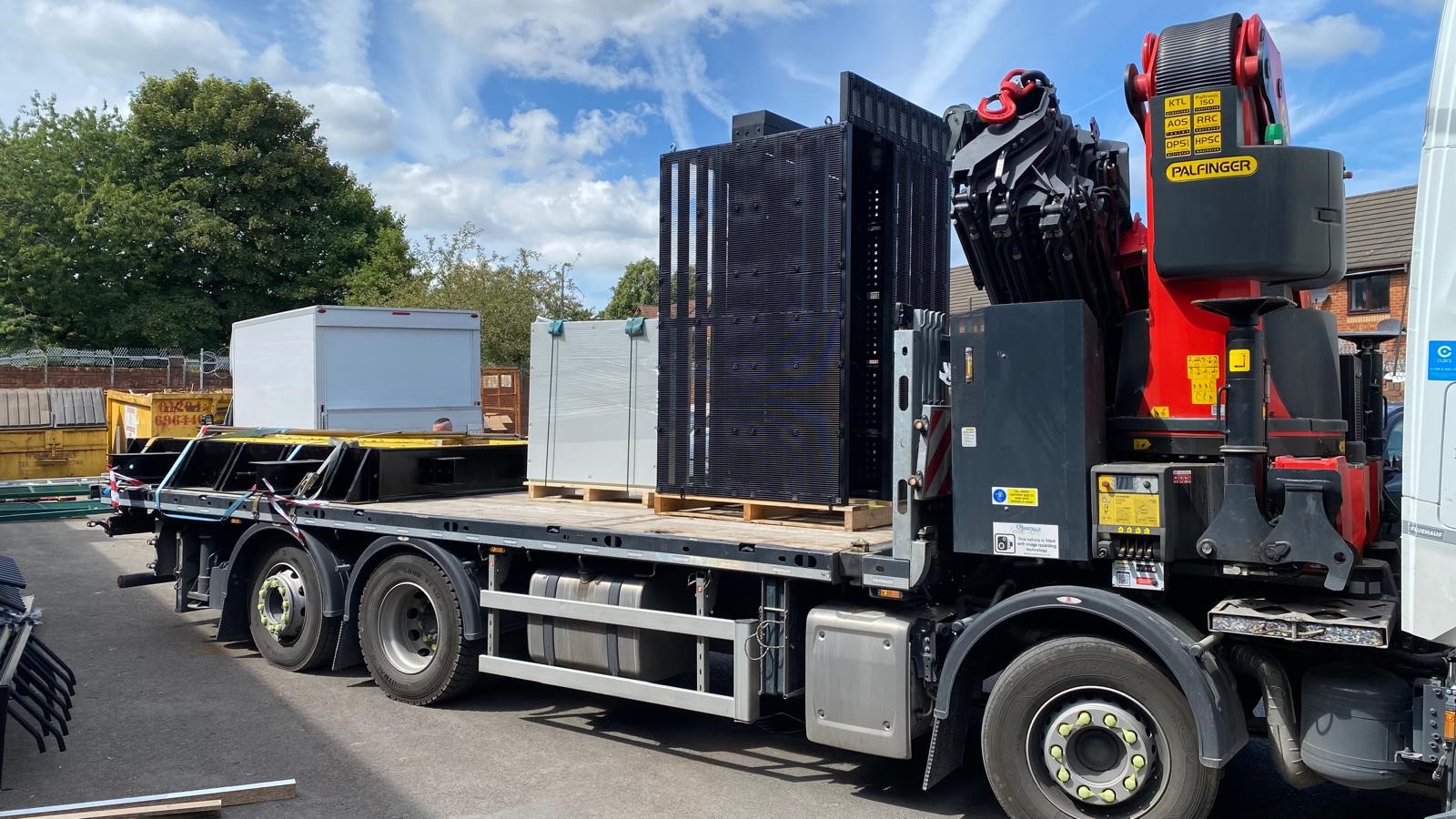
Recently, our manufacturing team completed one shallow-mount HVM road blocker and one LPS 1175 full-height turnstile, which are now being dispatched and transported to site ready for installation.
This latest project highlights how different physical security measures can work together as part of a wider, layered security strategy.
What is LPS 1175?
LPS 1175 is a security standard developed by the Loss Prevention Certification Board (LPCB) for assessing the resistance of physical security products against forced entry.
Developed by the Loss Prevention Certification Board (LPCB), LPS 1175 provides a recognised method for testing and classifying security products based on their ability to withstand defined attack methods.
The standard can be applied to a range of physical security products, including:
- Security doors
- Gates
- Fencing
- Barriers
- Turnstiles
- Access control systems
- Other physical security products
For businesses and organisations responsible for protecting high-security sites, LPS 1175 provides an important benchmark when specifying physical security products.
Rather than simply describing a product as “high security”, the standard provides a recognised classification that can help security professionals determine whether a product is suitable for a particular threat environment.
Why is LPS 1175 important?
Choosing the right level of physical security starts with understanding the risks facing a site.
A government facility, utility site, critical infrastructure location or high-security commercial premises may have very different security requirements from a standard commercial building.
LPS 1175 helps security professionals and specifiers assess physical security products against defined attack scenarios.
This makes it easier to select security products that provide an appropriate level of resistance and delay for the risks identified.
Importantly, the highest possible security rating isn’t necessarily the right solution for every site.
The appropriate level of protection should be based on the individual requirements and risk profile of the location.
Factors to consider include:
- The type of site being protected
- The assets and people requiring protection
- Potential security threats
- The required level of delay
- Existing perimeter protection
- Access and operational requirements
- Installation conditions
- The consequences of unauthorised access
Taking a risk-led approach helps ensure that physical security is both effective and appropriate for the environment.
Understanding LPS 1175 Security Ratings
One of the key benefits of LPS 1175 is that it provides a structured classification system.
The standard considers factors including the type of tools and attack methods used during testing, alongside the level of delay provided by the security product.
This gives specifiers a clearer way of comparing security products and understanding their tested performance.
When selecting an LPS 1175 security product, it is therefore important to look beyond the term “high security” and consider the specific classification and certification of the product.
This helps ensure that the selected solution is appropriate for the threat it is intended to address.
LPS 1175 and Layered Security
Physical security works most effectively when different security measures are combined.
This is known as layered security.
Rather than relying on one barrier or access point, a site can incorporate several layers of protection designed to deter, delay and prevent unauthorised access.
A high-security site may include:
Perimeter protection → vehicle mitigation → controlled access → building protection
These layers can include security fencing, gates, HVM systems, road blockers, turnstiles, access control and security-rated doors.
Each element has a different role to play within the site’s overall security strategy.
This approach is particularly important for critical infrastructure, government estates, utilities, energy facilities and high-security commercial sites, where unauthorised access can have serious consequences.
LPS 1175 Full-Height Turnstiles
Pedestrian access is an important consideration when developing a high-security perimeter.
While vehicle entrances may be protected using barriers or HVM systems, pedestrian access points can also require robust security measures.
LPS 1175 full-height turnstiles can be incorporated into controlled pedestrian access strategies, helping restrict unauthorised entry while providing controlled access for authorised personnel.
As part of a recent project, our manufacturing team completed one LPS 1175 full-height turnstile, which is now being transported to site for installation.
The project demonstrates how engineered pedestrian security can form part of a wider physical security strategy.
HVM Road Blockers for Vehicle Protection
Alongside the LPS 1175 full-height turnstile, our manufacturing team has also completed one shallow-mount HVM road blocker for the same project.
HVM stands for Hostile Vehicle Mitigation.
HVM systems are designed to help protect people, buildings and critical assets from vehicle-based threats and unauthorised vehicle access.
Road blockers provide a substantial physical barrier at vehicle access points while allowing authorised vehicles to pass when the system is operated correctly.
A shallow-mount road blocker can also be particularly useful where ground conditions, existing infrastructure or excavation depth create limitations during installation.
The right HVM solution should always be selected based on the individual site’s security requirements, operational needs and installation conditions.
Why Professional Security Specification Matters
Selecting physical security products isn’t simply about choosing the strongest barrier available.
The solution needs to be appropriate for the site, the identified threat and the way the facility operates.
This is why professional specification is so important.
At Security Solutions, we work with organisations looking to improve perimeter security, vehicle protection and controlled access across a range of demanding environments.
Our team can help identify suitable solutions based on the requirements of the site, from individual security products through to wider perimeter protection strategies.
Manufactured by Security Solutions
Our latest project is a great example of the work carried out by our manufacturing team.
The shallow-mount HVM road blocker and LPS 1175 full-height turnstile have been manufactured at our facility before being dispatched and transported to site for installation.
From engineering and manufacturing through to delivery and installation, every stage is important when producing security equipment for high-security environments.
Our manufacturing capabilities enable us to provide engineered physical security solutions designed around the requirements of individual projects.
Protecting Sites Across the UK
Whether you’re responsible for a critical infrastructure site, government estate, utility facility, energy provider or high-security commercial premises, choosing the right physical security solution is essential.
From LPS 1175 security products and pedestrian access systems to HVM road blockers and vehicle barriers, Security Solutions can help you develop a security strategy based around your site’s individual requirements.
Contact our team today to discuss your physical security and perimeter protection requirements.